Nobody knows what that noise is.
Drivers don't know if a warning light means a quick fix or a big bill. Independent garages lose time on phone calls and guesswork before they can even quote.
 Venture · Automotive
A guided, AI-powered fault checker that tells drivers what's likely wrong with their car, and helps independent garages triage jobs before the car even arrives.
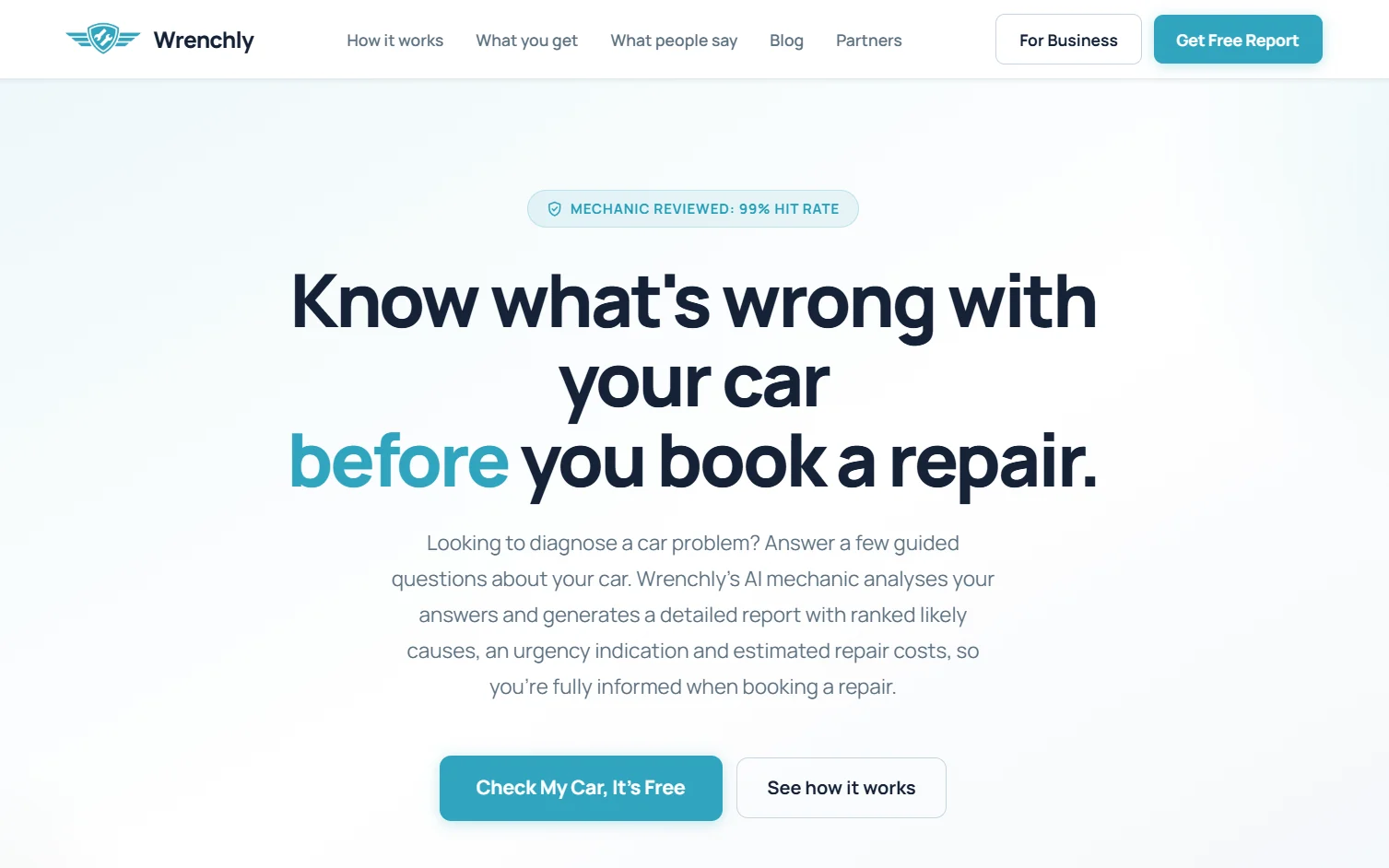
Drivers don't know if a warning light means a quick fix or a big bill. Independent garages lose time on phone calls and guesswork before they can even quote.
We designed a short guided flow that captures the vehicle and its symptoms the way a mechanic would ask about them, then built fault exclusion logic so the AI starts from evidence, not guesswork.
Drivers get a free report by email, and garages get better-informed customers and jobs that arrive already triaged.
The reason Wrenchly's reports are focused rather than vague.
Most AI car tools hand the driver a free-text box. The AI only ever sees what the driver thought to mention, so its answers stay broad. We designed and built a fault exclusion layer that works the other way round.
Wrenchly turns a short set of structured symptom questions into evidence. Symptoms the driver confirms point towards causes. Symptoms they rule out, or never report, eliminate them. Combined with the car's own details from the reg lookup, that narrows a long list of possible faults to a focused shortlist before the AI writes a word.
A worried driver describes what they noticed, not what they didn't. Nothing gets ruled out, so the answer has to cover everything. Structured questions capture both, and that's what makes the shortlist genuinely narrow.
Enter a number plate and the vehicle details fill themselves in.
A short, friendly flow that gathers what matters without technical jargon.
Likely causes ranked by probability, each with an urgency rating.
A realistic idea of what the fix might cost before visiting a garage.
A clean, branded report the driver can keep or show their mechanic.
Built to work with independent garages and garage directories.
The unglamorous work that makes a product dependable.
Each path through the questions is designed and tested end to end, so no combination of answers leads to a dead end or an empty report.
The AI receives organised evidence rather than a paragraph of guesswork, and returns its findings in a consistent report format every time.
Drivers never need technical terms. Everyday descriptions are translated into diagnostic evidence behind the scenes.
If the reg lookup can't find a car, drivers enter the details by hand and carry on without losing their place.
Reports give likely causes and an informed starting point, never a guaranteed diagnosis, and always point drivers towards a mechanic.
Vehicle data, AI analysis, email delivery and payments work together through API integrations, with automations running in the background.
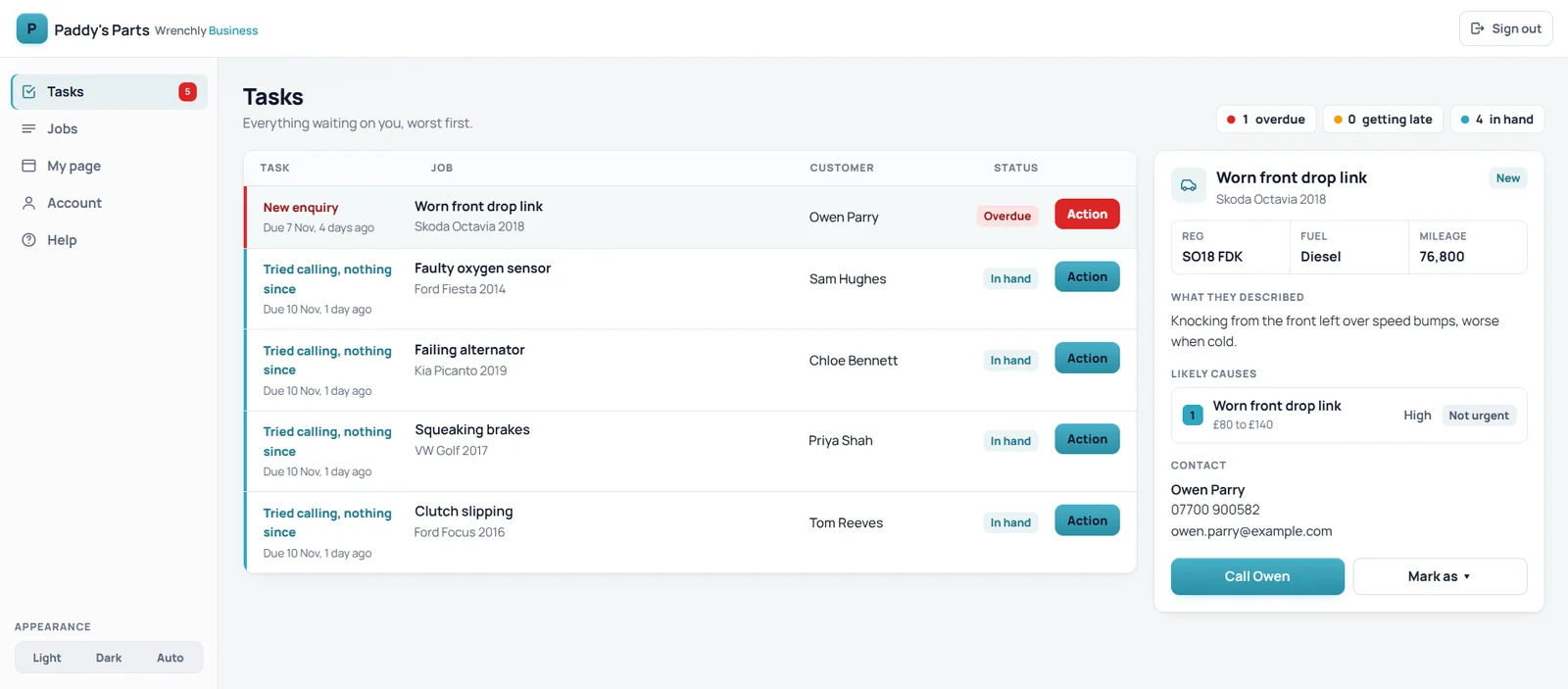
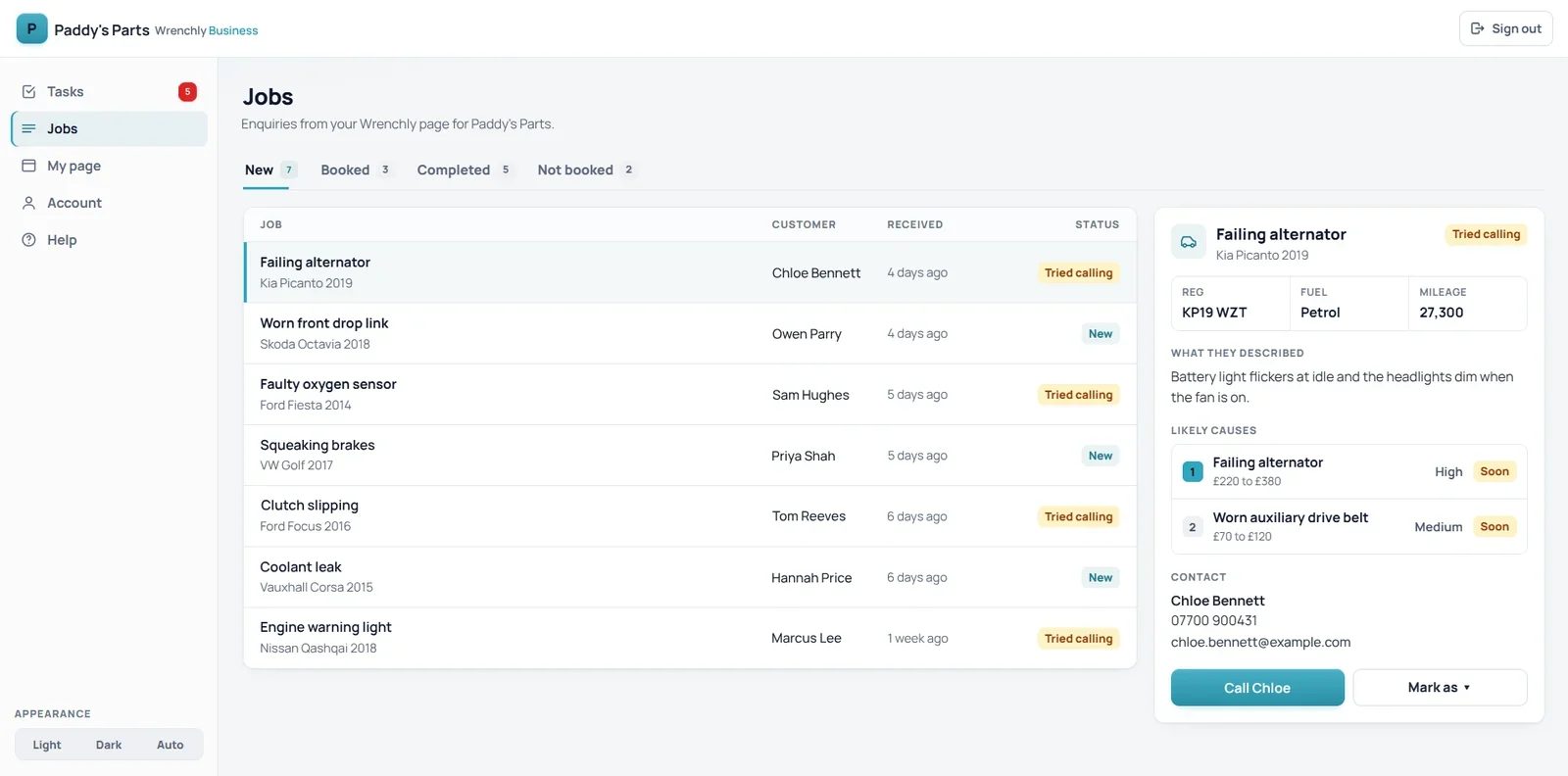
Independent garages get their own white-labelled Wrenchly page. Customers who enquire through it arrive with the vehicle, what they described and the likely causes already worked out, and every job is managed from one dashboard: tasks sorted worst first, jobs tracked from enquiry to booking, and one tap to call a customer back.
Theories, scored and validated, on a global leaderboard.